Concrete steps construction in Anchorage AK - built on solid ground, not loose fill
Cracked, sinking or crumbling front steps? We take them out and pour new ones on solid support, on ground that isn't frozen.
- Support settled first We decide what holds your steps up before anything else.
- Poured on thawed ground We pour on unfrozen ground and pick the date around weather.
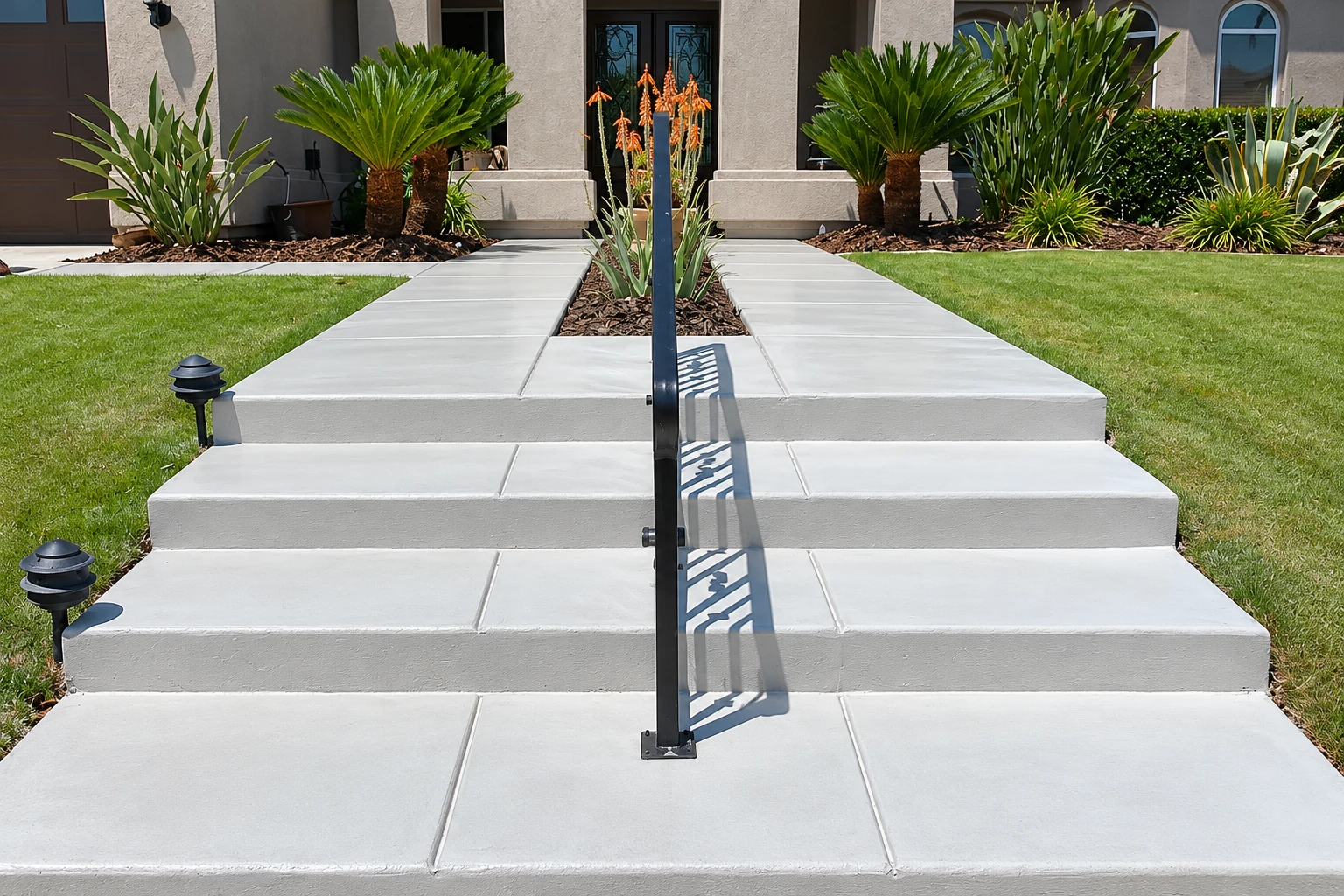
- Broom-finished treads A light ridged texture gives your boots grip on wet days.
- Straight answers Plain talk on what your steps need and what moves the price.
- Fully licensed and insured.
- Free on-site estimates.
- We reply within 1 business day.
How do you know your concrete steps need replacing?
Steps take a beating from frost, salt and boots, and small problems usually grow every winter. Here's what to look for before someone slips or the damage spreads.
Steps pulling away from the house
A gap opening between the top step and the wall usually means the steps are settling on their own. Left alone, water gets in and the gap widens.
Steps tipping or sinking
If the steps lean or one side has dropped, the ground under them has usually moved. Each winter tends to push it further, and they get harder to climb.
Cracks across the steps
A crack across the part you step on often traces back to weak support or water under the steps. Freezing water opens it a little more every year.
Chipped, crumbling edges
Broken edges leave an uneven lip that catches a boot. It usually means the concrete was weak or wasn't protected while it hardened, and it keeps crumbling.
Water pooling on the steps
Water that sits on the steps or runs toward the door means the slope is wrong. In Anchorage, that water turns to ice right where you walk.
Steps that feel uneven to climb
If one step is taller than the rest, people trip on it, especially carrying groceries or coming down in the dark. It usually means they were laid out by eye.
How we build concrete steps in Anchorage
At Monolith Anchorage Concrete Company, we build concrete steps for homes in Anchorage and the cities around it, and I start every job by settling what the steps will sit on. Steps need solid support, not loose fill, so we break out the old steps, dig down to firm ground and pack the base before a form goes up. We set the forms so each step comes out the same height, lay rebar, steel bars that hold the concrete together if it cracks, and pour once the ground isn't frozen. The treads get a broom finish, fine ridges dragged into the surface so boots grip, and then we cover the steps while they cure, the wait while fresh concrete gains its strength. Price mostly follows how many steps you need, how high your door sits, what support the ground calls for and whether old steps come out first. The schedule follows the ground and the forecast, and your own number comes in the written estimate after I see the site. If the budget is tight, I'll cut back on the finish before the base, because the base is hidden on day one, it's the first thing people want to trim, and it's what decides whether the steps stay put.
Steps usually tie into something bigger. If you're adding a room or garage on a slab, we plan the steps alongside the slab foundation building so the landing meets the floor where it should. If your house needs new footings and walls, foundation installation is the right time to plan steps that tie into that foundation instead of sitting loose beside it.
What happens when you call about concrete steps in Anchorage?
Here's how a steps job runs with us, from your first call to the walk-through at the end.
Call or send a message
Call (907) 206-3358 or send a message about your steps. I come out, look at the site and ask how you use that entry.
Read your written estimate
I put the estimate in writing so you can read it over and compare. Nothing starts until you say go.
We plan and pour
Once you say go, we line up any permits the job needs and set a pour date with the weather in mind.
Walk through it together
When the forms come off, we clean up and walk the steps with you. You'll hear what to watch for the first winter.
Why Anchorage homeowners call Monolith Anchorage Concrete Company
The owner on every job
I look at every job, write the estimate and pour with my crew, so whoever quoted it is there building it.
Trained on Anchorage crews
I learned on crews around Anchorage, then started this business in 2013, so I know how steps here fail.
Licensed and insured for this work
We're fully licensed and insured for the work we do at your front door, from tear-out to pour.
Satisfaction guaranteed on every job
That's our promise. Call (907) 206-3358 or send a message, and I'll come out and look at your steps.
Get a written estimate for new concrete steps
Tell us how many steps you need and how high your door sits, and add photos if you can. We reply within one business day, and I come out to give you a free written estimate with no obligation.
Examples of poured concrete steps
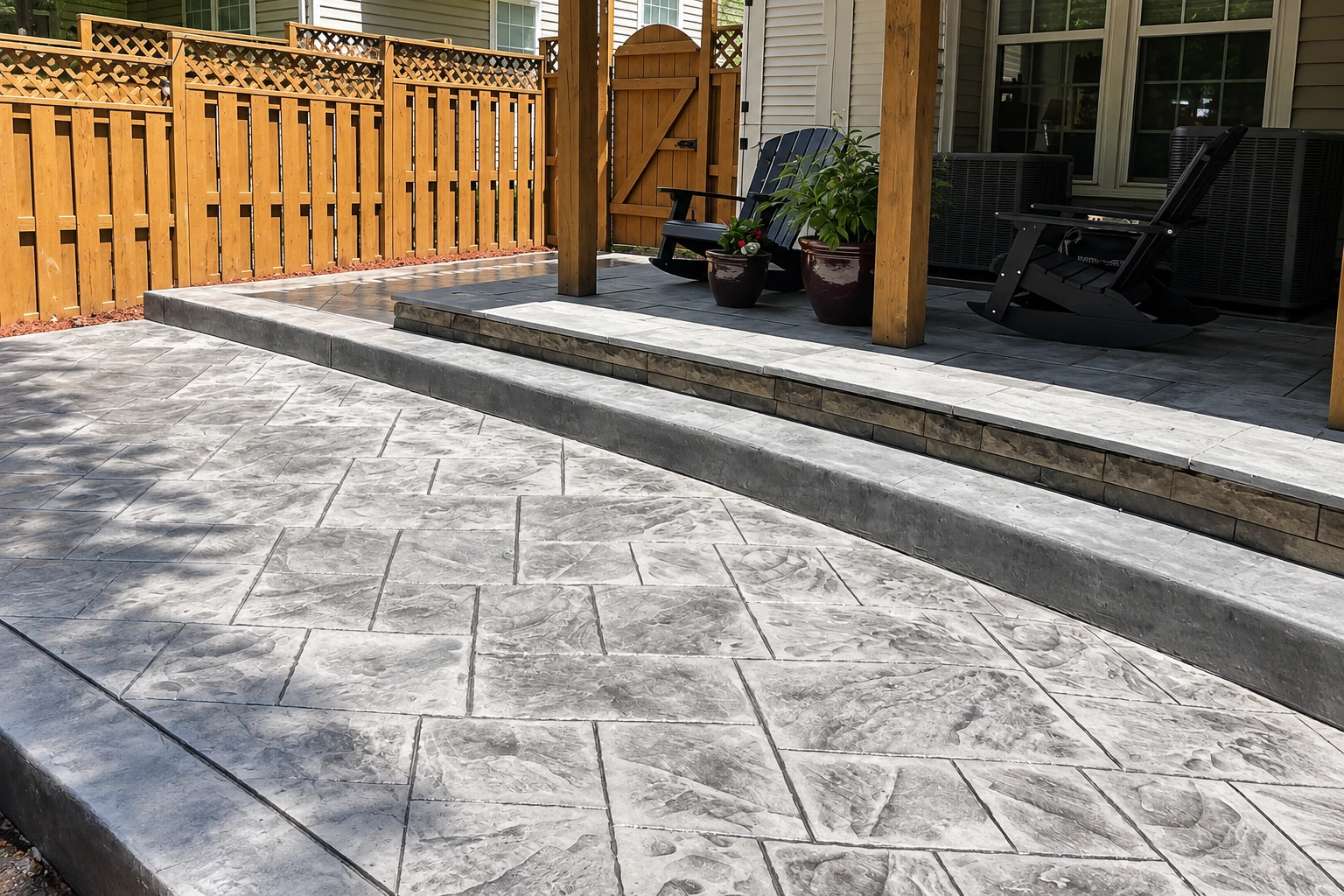
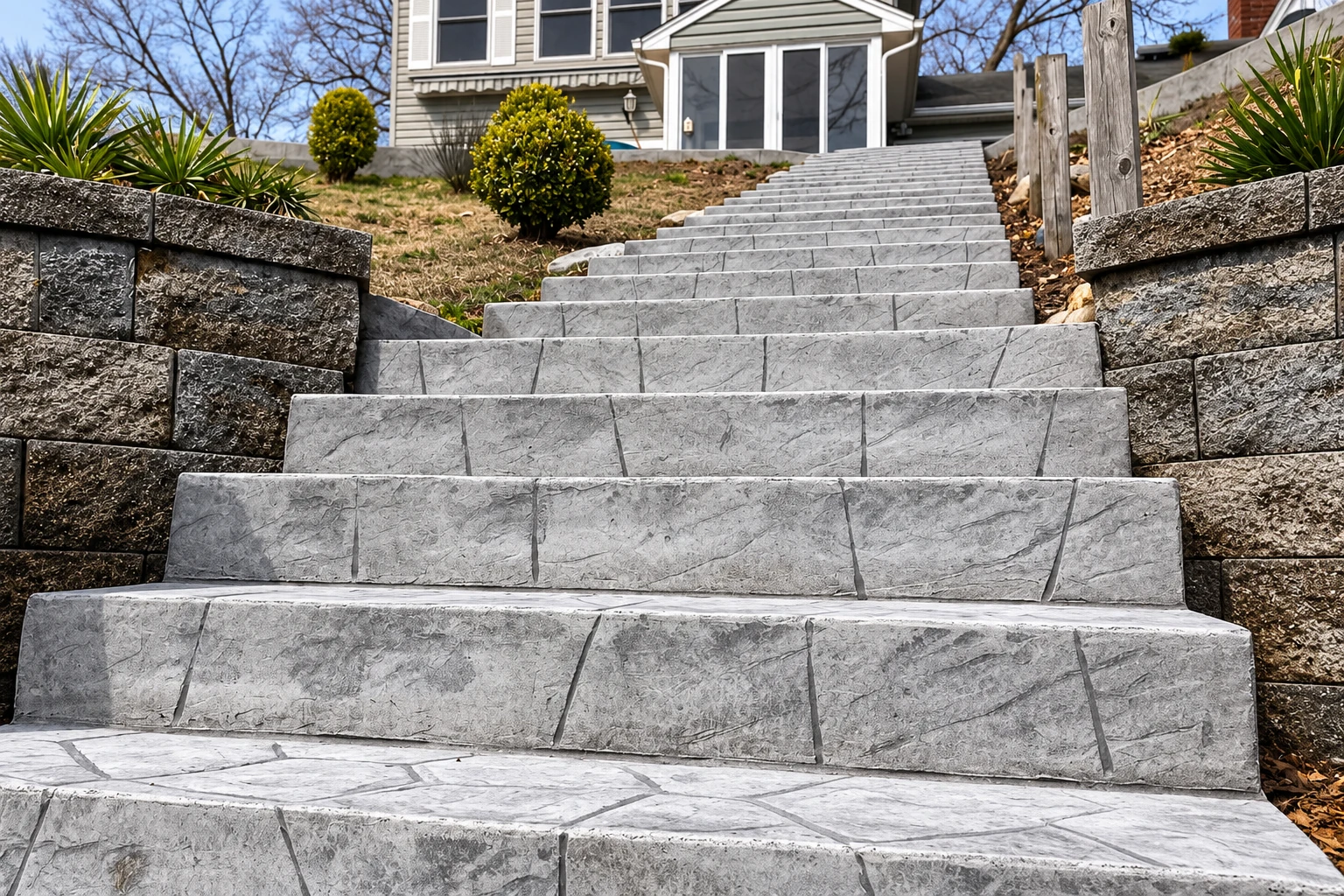
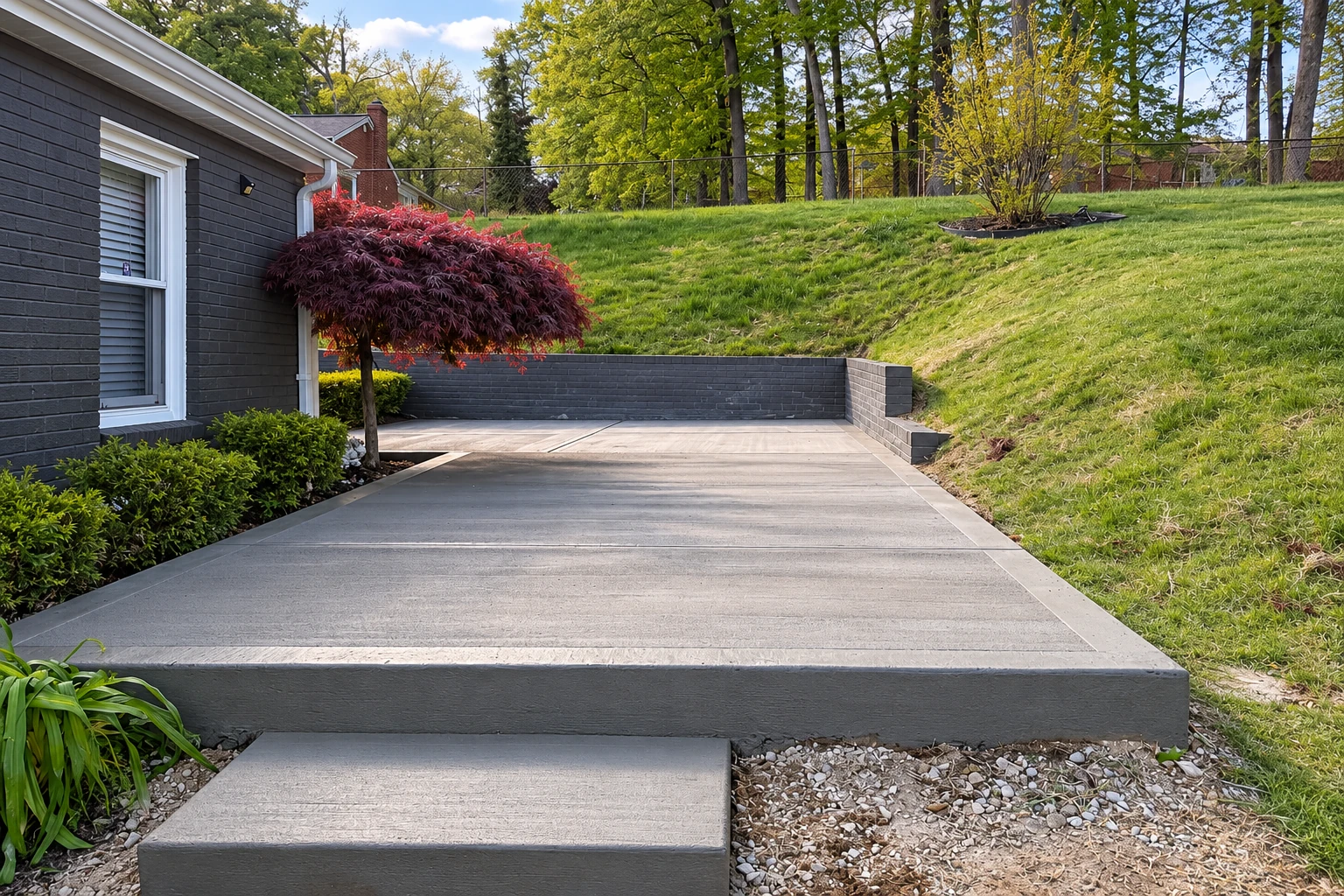
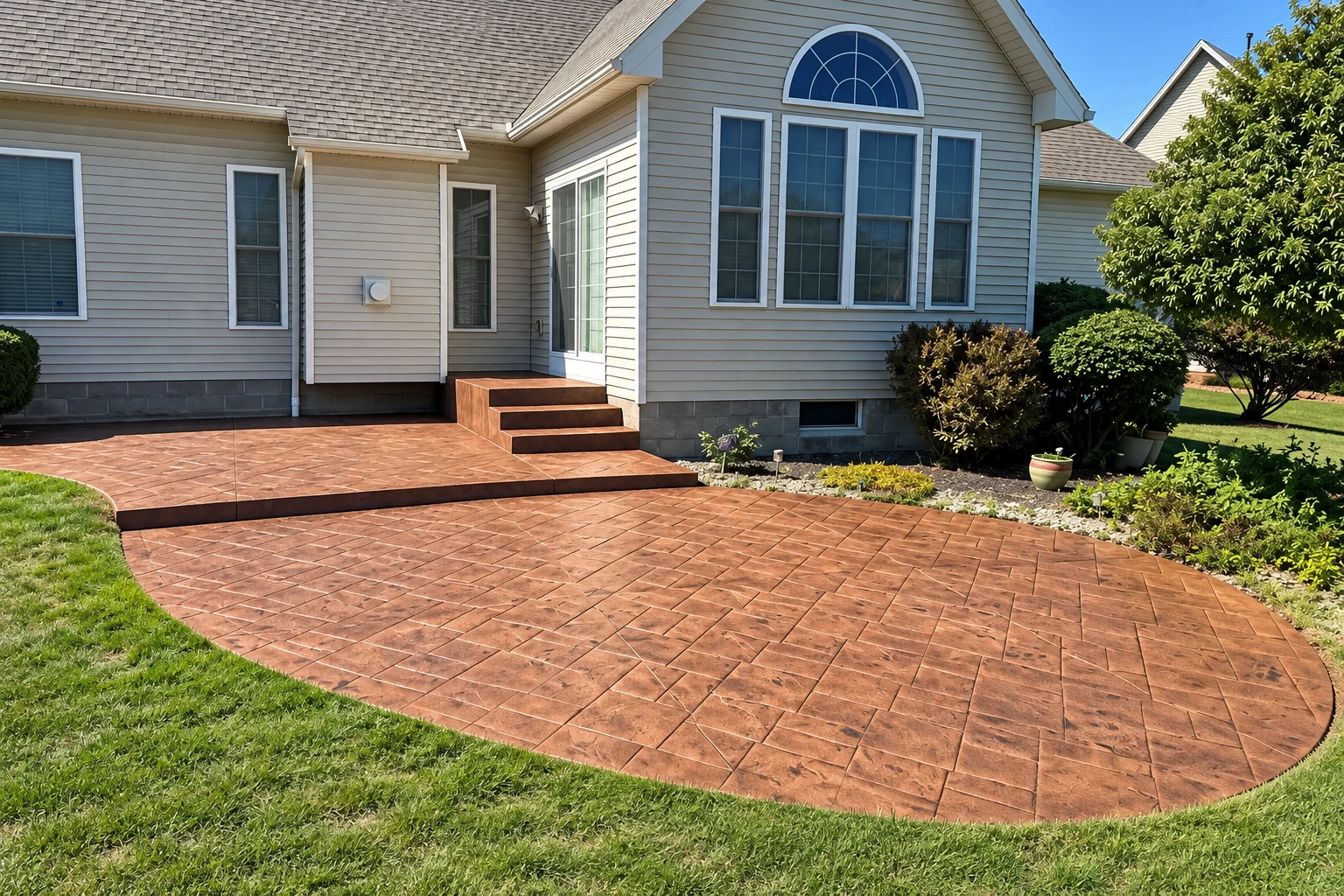
Look through these examples of poured steps, landings and entries to get a feel for the shapes and finishes you might want.
Common questions about concrete steps
These are the questions people ask me most about new steps in Anchorage. If yours isn't here, call or send a message and I'll answer it for your job.
How much do concrete steps cost in Anchorage?
Poured concrete steps, installed, usually cost about $200 to $500 per step across the US. That's a national figure, not our price, so use it as a rough guide. I give you your own number in a written estimate after I look at the site.
Can concrete steps be poured in winter in Anchorage?
Yes, as long as the ground isn't frozen and the new concrete is kept from freezing. Concrete poured on frozen soil is likely to settle unevenly and crack when the ground thaws, and fresh concrete that freezes can lose more than 50% of its potential strength, so it needs protection until about two days after the pour. Concrete guidance says cold-weather concrete that's protected and cured long enough can end up stronger and more durable, so once the forecast nears 40°F, ask any crew how they'll cover the steps.
What is the best way to support concrete steps so they don't sink?
Pick the support before anything else, because whether steps rest on the ground, tie into a landing or your house foundation, or span between supports decides the steel, the footing and the frost work. That matters in Anchorage because of frost heave, soil lifting unevenly as water underground freezes into ice, and steps on weak support ride up with it. Ask any contractor early how your steps will be held up.
Do concrete steps need a handrail in Anchorage?
Yes, if the stairs have four or more risers, the rise from one step to the next, because the city's guidance calls for a handrail on at least one side running their full length. Open sides that stand well above the ground below also need guards, a barrier along the edge, and the city's handout on handrails and guards says where that starts. We lay out your steps to it before we pour.
How do I care for new concrete steps in their first winter?
Skip deicing chemicals the first winter, and use them in moderate amounts after that, as concrete guidance advises. Salt is tied to scaling, the top layer flaking away, which is the most common kind of frost damage to concrete. Before the pour, it's worth asking whether the mix has air added on purpose, since that helps concrete stand up to soaking, freezing and thawing, and limits scaling from deicers.
Will new concrete steps crack like my old ones?
They're much less likely to when the support, the water and the pour timing are handled, though no concrete is crack-proof. Most cracks I see on old steps trace back to water running under them, a slope toward the house, or a top layer that froze or dried too fast while it set. We check where your water runs and slope the steps away from the door before we pour.
Where we build concrete steps
In Anchorage, we build steps to the city's Building Safety guidance on step height and depth. We work in the cities around it too, so choose your area or ask.
Ready to replace your concrete steps? Call us.
We take calls seven days a week, so call while you're standing at the steps and can tell us what you see.