Concrete Floor Installation in Anchorage AK - a solid floor planned around the cold
Old floor cracked, sinking or dusting, or a new space waiting on a slab? We pour a flat, properly cured floor you can plan around.
- Base dug and packed We dig out and pack the base before concrete arrives.
- Pour days picked carefully We set the pour around the forecast, not just the calendar.
- Joints cut on time Control joints go in early so cracking follows a planned line.
- A plan for heavy items We help you schedule when furniture and equipment go back.
- Fully licensed and insured.
- Free on-site estimates.
- We reply within 1 business day.
How do you know your concrete floor needs replacing?
Most floor problems start small and get worse with every freeze and every load, so it pays to know what you're looking at before a patch turns into a tear-out.
Cracks that keep widening
Hairline cracks are normal. Cracks that open wider each season or break the floor into pieces usually mean the base moved, and they let water in.
Sections sinking or uneven
A floor that drops at one edge or rocks underfoot usually sits on a base that was raked level instead of packed. It trips people and keeps settling.
Dusty, flaking surface
If the top powders onto your shoes or flakes away, the surface was weakened during the pour or the cure. Paint and coatings won't hold on it.
Water pooling in one spot
Puddles that sit in the same place mean the floor doesn't fall where it should. Standing water works into cracks and does more damage when it freezes.
Curled or raised edges
Slab edges that lift and leave a lip at joints or walls are curling. Carts and doors catch on them, and the step usually grows over time.
A dirt or gravel floor
A shop, addition or basement with only dirt or gravel underfoot needs a slab done right the first time, before walls, shelving and storage go in.
How we install a concrete floor
I start by looking at what the floor will carry and where water will run, because a floor that falls toward the wrong wall can't be fixed with a trowel. We dig out and pack the subgrade, the layer the slab sits on, then set forms and rebar, the steel inside that keeps cracked pieces from pulling apart. We pour when the weather suits it, finish the surface and cut control joints, shallow grooves that give cracking a straight line to follow, before the concrete gets too hard to cut. Then it cures, which is the wait while it gains strength, and rushing that is how you get a weak, dusty top. I'll tell you up front that a new floor can show some cracking and how we'll handle it if it does, and we'll help you plan when heavy things can go back on it. If the budget gets tight, I'd rather spend it on the base than on the finish, because the base is what keeps a floor flat and nobody sees it on day one. Price moves with the floor's size and thickness, how much base work it needs and whether we're pouring in the cold, and the schedule turns mostly on weather and cure time. Your written estimate spells out both for your floor.
A new floor often comes with work right outside it. If the floor meets a door that sits higher than the yard, we can pour concrete steps to match, and if there's a pool on the property, concrete pool decks need the same careful base and timing.
What happens when you call about a concrete floor in Anchorage?
From the first call to the last walk across the floor, you deal with the same person, and you know what's next before it happens.
Call or send a message
Call (907) 206-3358 or use the contact form, and we'll get back to you. Then I set a time to come see the space.
I visit and write the estimate
I look at the site, ask what the floor is for and what it needs to carry, then give you the estimate in writing.
We set the pour and work it
Once you say go, we line up any permits and pick a pour date with the weather in mind. I work the pour alongside my crew.
Clean-up and a walk-through
We clean up and walk the finished floor with you. We go over the cure and the dates you planned for loading it.
Why Anchorage homeowners call Monolith Anchorage Concrete Company
I'm at the estimate and the pour
I look at every job, write the estimate and work the pour with my crew, so whoever priced it is there when it goes in.
In business since 2013
I learned on crews around Anchorage before starting this company, and concrete is hard to undo, so we aim to do it once.
Fully licensed and insured
We're fully licensed and insured, which is the first thing you should ask any crew coming to work on your house.

Cold weather planned from day one
Plenty of Anchorage floors go in when it's cold, so we plan protection and curing before the pour date is set.
Get a written estimate for your concrete floor
Tell us the floor's rough square footage, whether it's a garage, basement or new build, and when you'd like it done. We reply within one business day, and I come out for a free on-site estimate with no pressure and no obligation.
Concrete floors and slabs
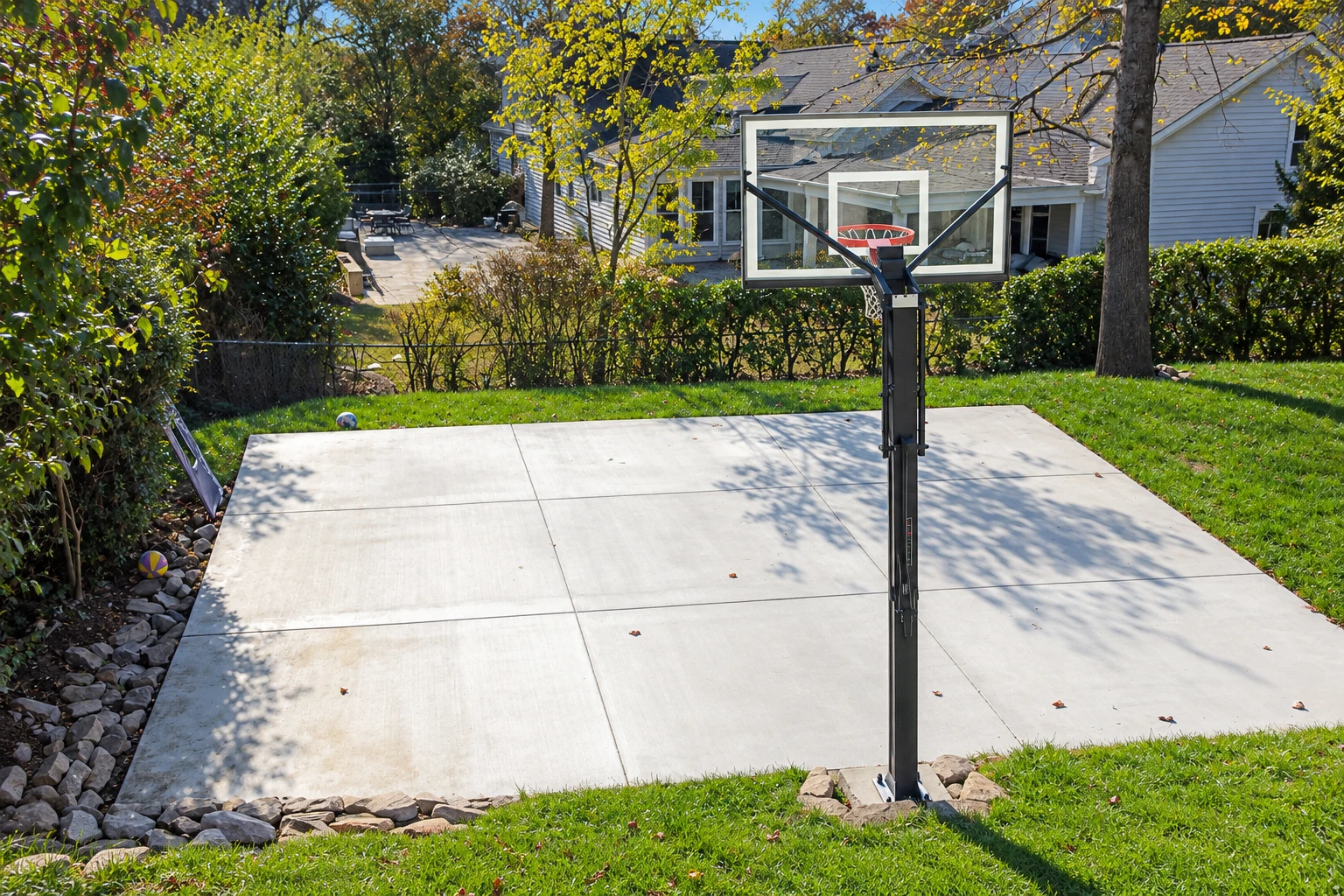
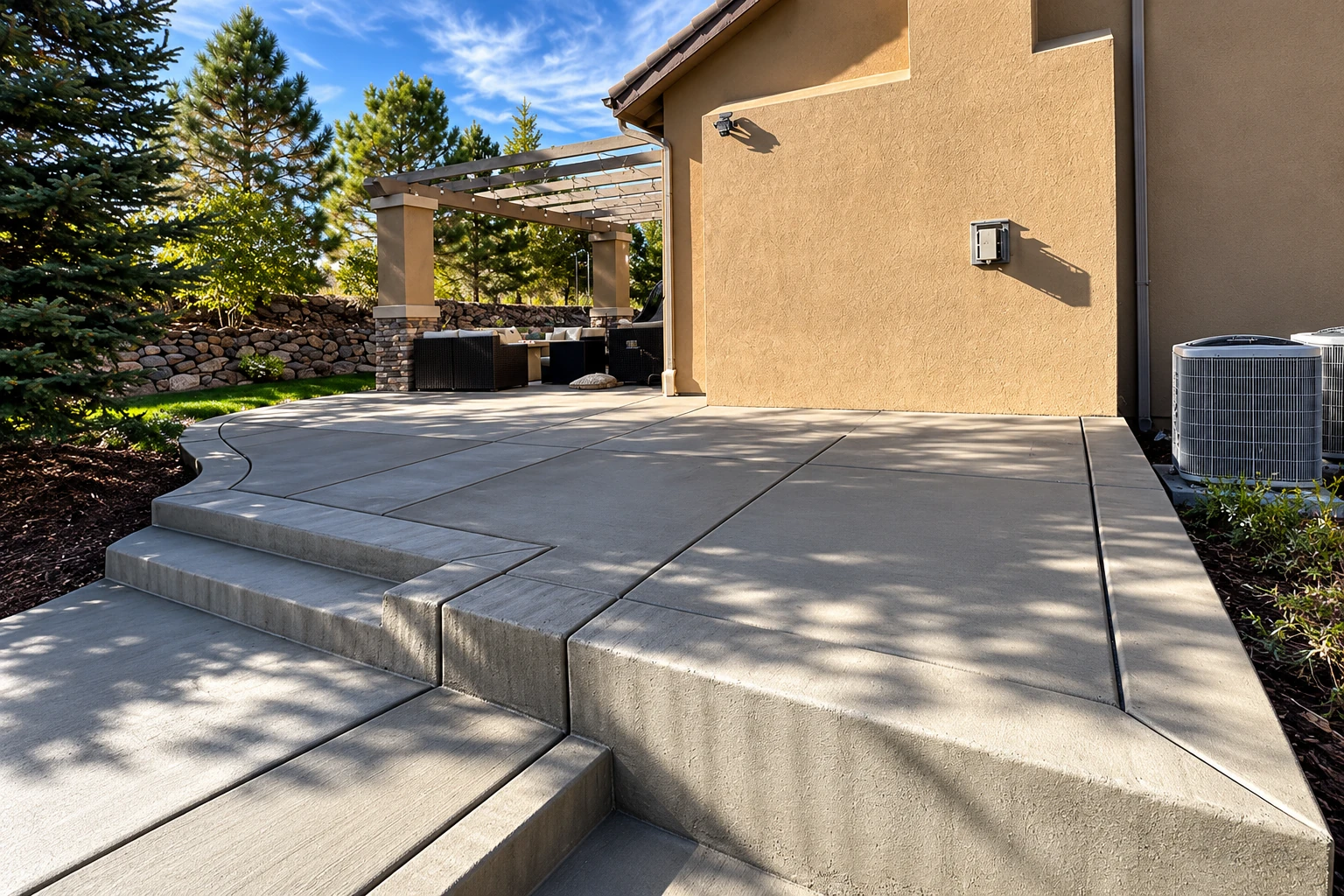
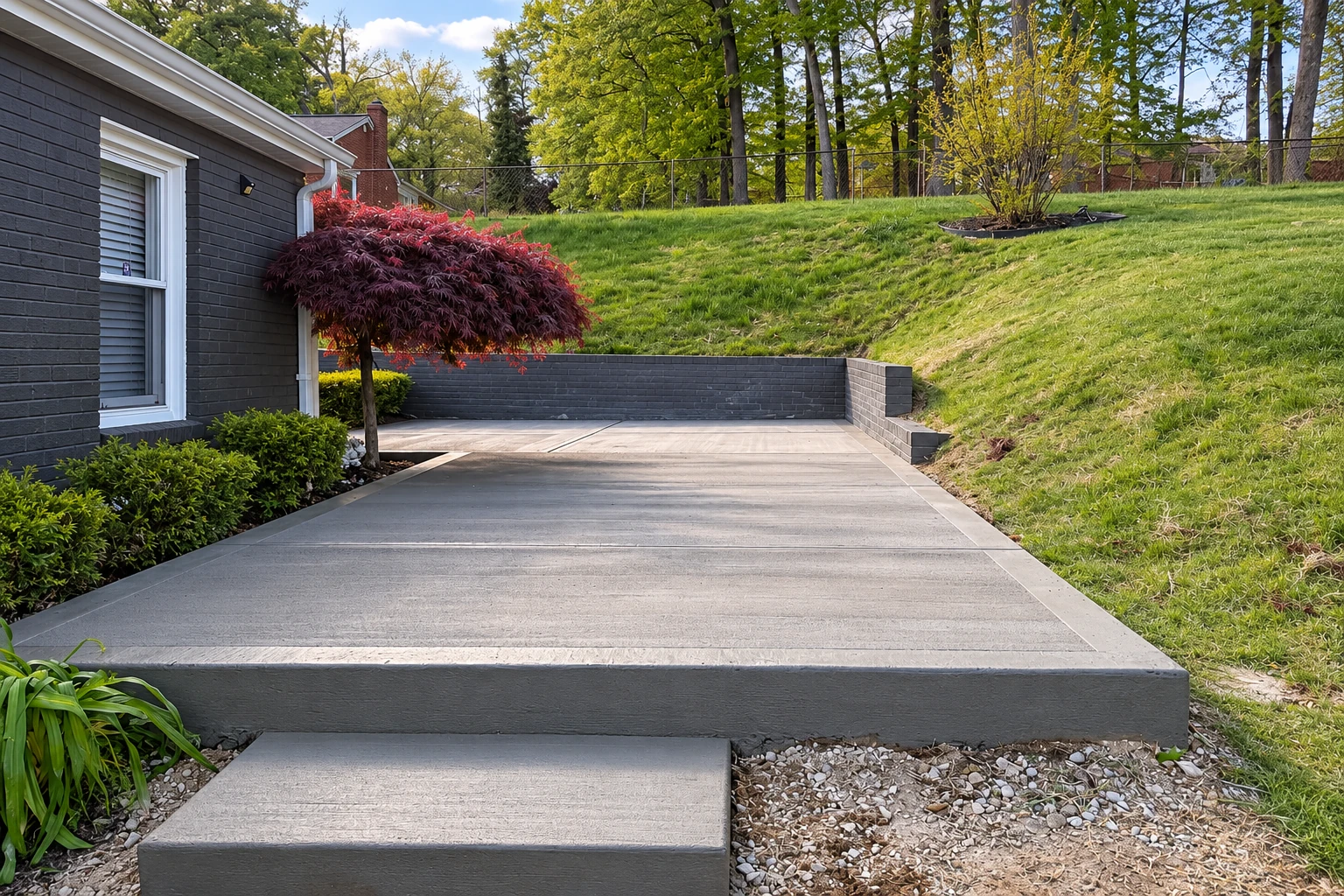
Look through these examples of concrete floor work to get a feel for finishes and layouts before we talk about what yours needs.
Concrete floor questions
These are the questions people ask me most about new concrete floors. If yours isn't here, call or send a message and I'll answer it for your job.
How much does a concrete floor cost in Anchorage?
A plain concrete slab in Anchorage, with no staining or stamping, usually costs about $7 to $14 per square foot. A reinforced slab runs a little more per square foot than an unreinforced pad. Your own number comes in the written estimate after I've seen the space.
Will my new concrete floor crack?
It may show some, yes. National guidance on floor building says to expect some cracking and curling in any concrete floor, even with good design and good work, so judge a contractor on how they handle it, not on a promise of none. Our promise is satisfaction guaranteed on every job.
Can concrete be poured in an Anchorage winter?
Yes, and concrete placed in the cold can end up stronger and more durable than a warm-weather pour, as long as it's kept from freezing and cured long enough. National cold-weather guidance treats it as cold-weather work once the air is at or headed below 40°F while the fresh concrete is protected. Ask any crew which heaters or engines will run near the slab, because their exhaust can leave a dusty surface on concrete less than a day old.
How long does a new concrete floor take to cure before I can use it?
You can usually walk on a new slab within 48 hours, but it takes about a month to fully cure. Waiting a week before heavier loads is the safe choice, so plan when appliances, shelving or vehicles come back in.
What is the best thickness for a concrete floor in Anchorage?
Standard home floor slabs in Anchorage run four to six inches thick. Garage, basement and foundation slabs sit at the thicker end because they carry more. I'll tell you which fits once I know what your floor is for.
Does a concrete contractor need a license in Alaska?
Yes, Alaska law requires a contractor to hold a certificate of registration from the state Department of Commerce, Community, and Economic Development before bidding or working. A general contractor overseeing new home construction, or home work worth more than 25% of the value of the house being altered, also needs a residential contractor endorsement.
Where we pour concrete floors
Inside Anchorage's Building Safety Service Area, the building official decides whether your floor needs a permit, and outside it new buildings and additions need a land use permit. We handle that paperwork where we're able, and we work in Anchorage and the cities around it, so pick your area or just ask.
Talk to us about your concrete floor
Our phones are open into the evening seven days a week, so you can call (907) 206-3358 after work.