Concrete Parking Lot Building in Anchorage AK - a slab that holds up to ice melt
Lot chipping, cracking or holding water after a few winters? We pour concrete lots planned around Anchorage cold and ice melt from the start.
- Base dug out and packed We dig out soft ground and pack the base before pouring.
- Air-entrained mix We use it on lots that will see deicers all winter.
- Spring or summer pours We push for warm-season pours so the slab dries before winter.
- Street connection planned early We look early at how the lot ties into the street.
- Fully licensed and insured.
- Free on-site estimates.
- We reply within 1 business day.
How do you know your parking lot needs to be replaced?
Lot damage in Anchorage gets worse with every freeze, so catching these signs early can mean a planned rebuild instead of a scramble in spring.
Flaking on the top layer
Thin flakes peeling off the surface after winter usually mean ice melt and freezing got into the top. Each winter after that tends to peel it deeper.
Water sitting in low spots
Water that sits in the same spots after rain or melt means the lot settled or never drained right. It freezes there every winter, and the low spots usually grow.
Cracks that keep getting wider
A hairline crack is normal, but one that opens a little more each spring means the ground under it is moving. Water gets in and speeds it up.
Panels sinking or heaving
One slab sitting lower or higher than the next usually means a soft base or ground that moves with the cold. The raised edge trips people and catches plow blades.
Broken edge at the street
Concrete crumbling where the lot meets the street usually comes from heavy turning traffic on an edge that wasn't built for it. It spreads inward if it's left.
Patches on top of patches
When an old lot has been patched so often that the patches need patching, the base under it has usually given out. More patching just buys another winter.
What concrete parking lot building involves
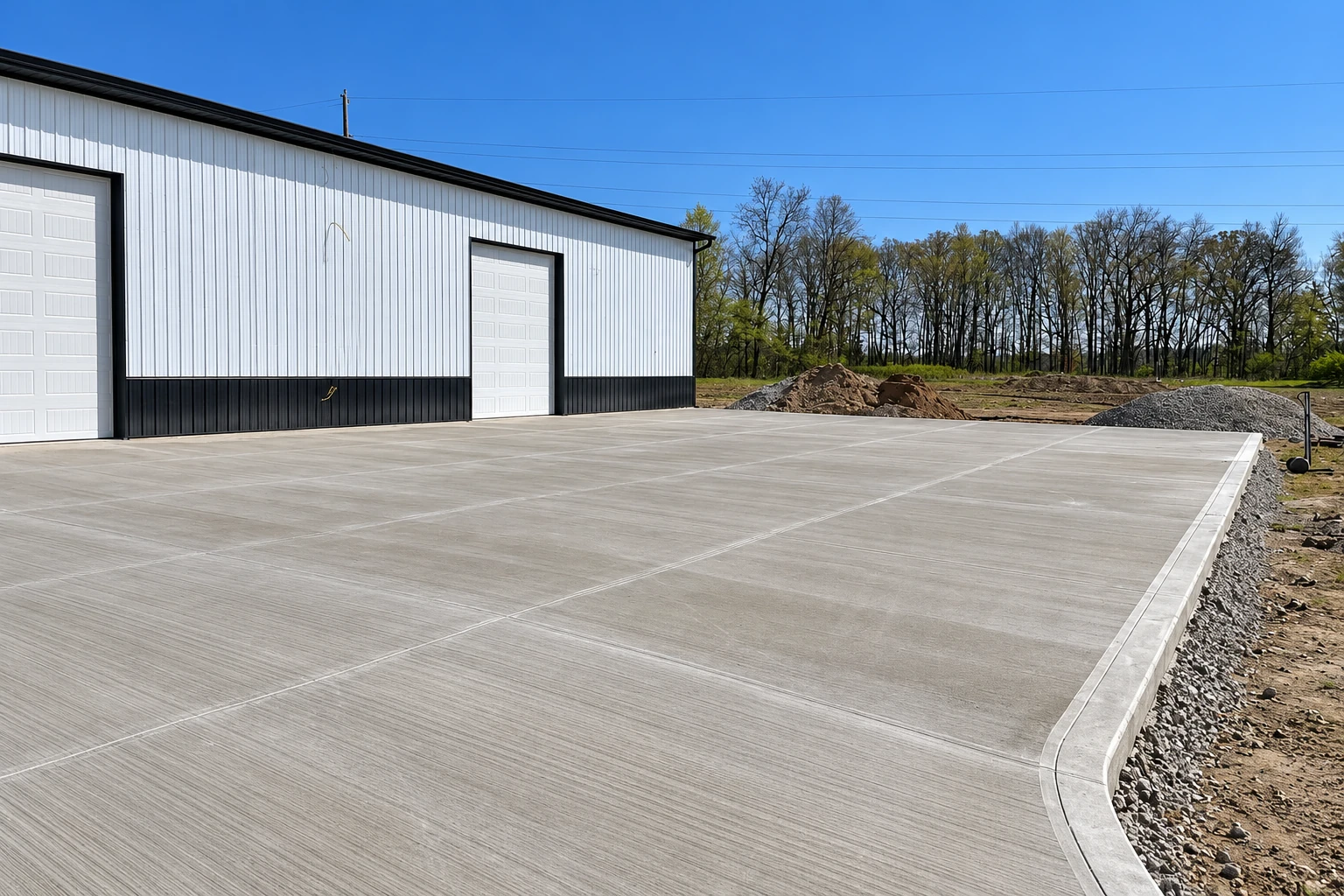
A concrete parking lot is a slab built to take cars, plows and ice melt for years, and most of what makes it last is out of sight. I start by looking at how the lot ties into the street, because the access and grade there shape everything behind it. Then we dig out soft ground, pack the subgrade, which is the ground the slab sits on, and check where water will run so it drains away from buildings instead of toward them. If the lot will see ice melt, we use an air-entrained mix, concrete with tiny air bubbles worked in, and I push for a spring or summer pour so the slab dries out before its first winter. We pour early in the day rather than in the heat, which keeps the top from going weak and dusty, then put on a broom finish, a light dragged texture so tires and boots grip when it's wet, and let it cure, the wait while it gains strength, before anyone parks on it. If the budget's tight, save on the finish and not the base, because the base is buried on day one and it decides whether the lot stays flat. The price moves with the lot's size, how much bad ground has to come out and how the street connection works, and the schedule turns on the season and the weather. Your written estimate lays out both for your site.
Some lots need more than the slab. If you're putting in light poles, a sign or a carport, we pour the concrete footings for them in the same plan, so nothing gets cut into a new slab later. If the building next to the lot has settled and sits low against the new grade, foundation raising first lets the lot meet it cleanly instead of sending water at its walls.
What happens when you call about a parking lot in Anchorage?
Here's how a lot goes from your first call to a finished slab you can park on, with the weather in mind at every step.
Call or send a message
Call (907) 206-3358 or use the form, and tell us about the lot. Then I come out, look at the site and ask what you need.
Get a written estimate
I write up what the lot needs, from base to finish, and what drives the price. You get it in writing to look over before deciding.
Permits, pour date, pour
Once you say go, we line up any permits and set a pour date around the weather. Then we dig out, pack the base and pour.
Walk the finished lot
We clean up, then walk the lot with you. We go over when it's ready for cars and how to treat it the first winter.
Why Anchorage property owners call Monolith Anchorage Concrete Company
Owner on every pour
I look at your lot, write the estimate and work the pour with my crew, so nothing gets lost in between.
In business since 2013
I learned on Anchorage crews before starting this business in 2013, so cold weather is planned in from the first visit.
Covered while we work
We're fully licensed and insured, so you're not taking on the risk of an uninsured crew on your property.
Satisfaction guaranteed on every job
If the week's wrong for a pour, I'll tell you to wait rather than pour a slab that lets you down.
Get a written estimate for your concrete lot
Tell us the lot's rough size, the site improvements you have planned and any access or driveway changes at the street. We reply within one business day, and I come out for a free on-site estimate with no obligation.
Concrete lots and other flatwork
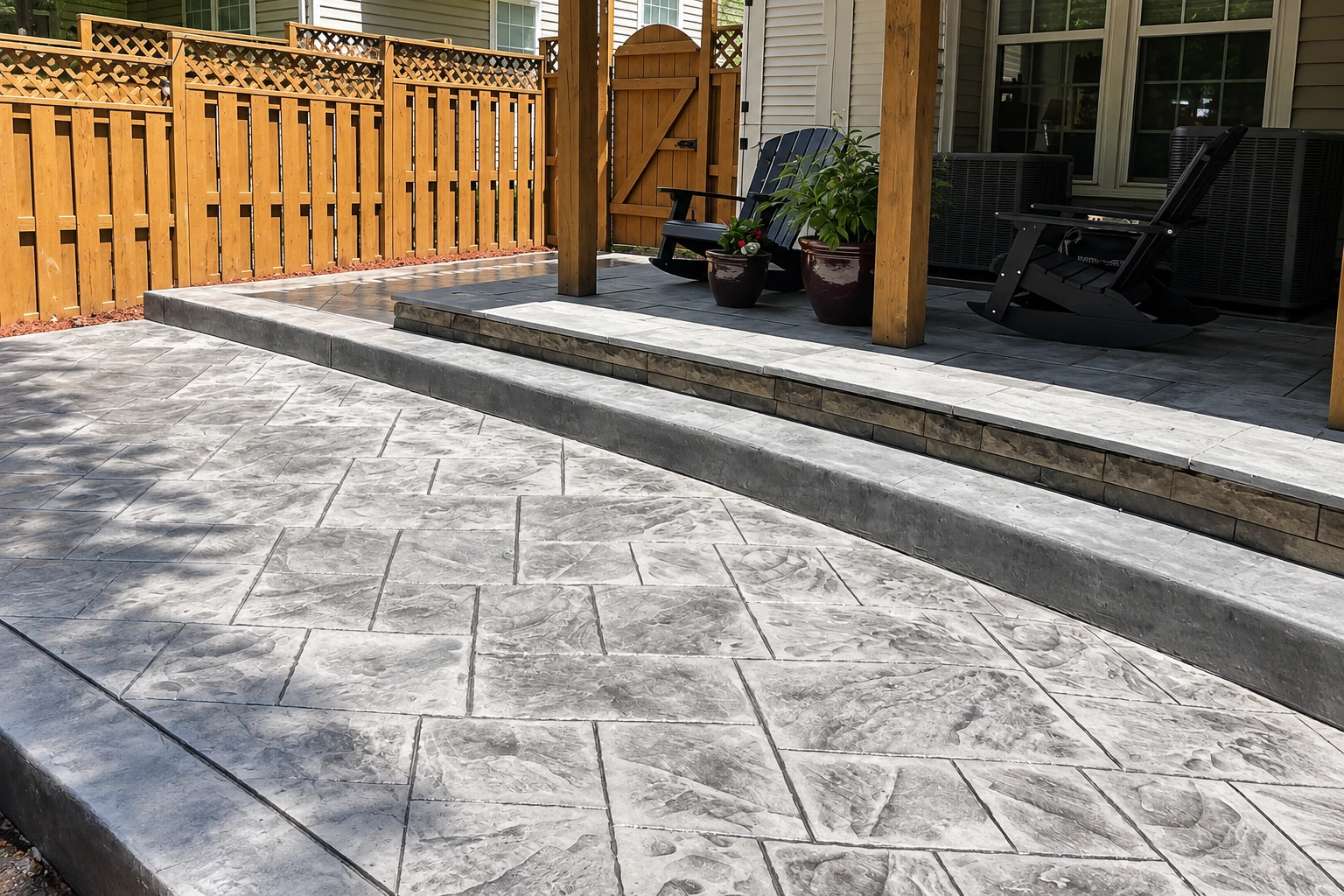
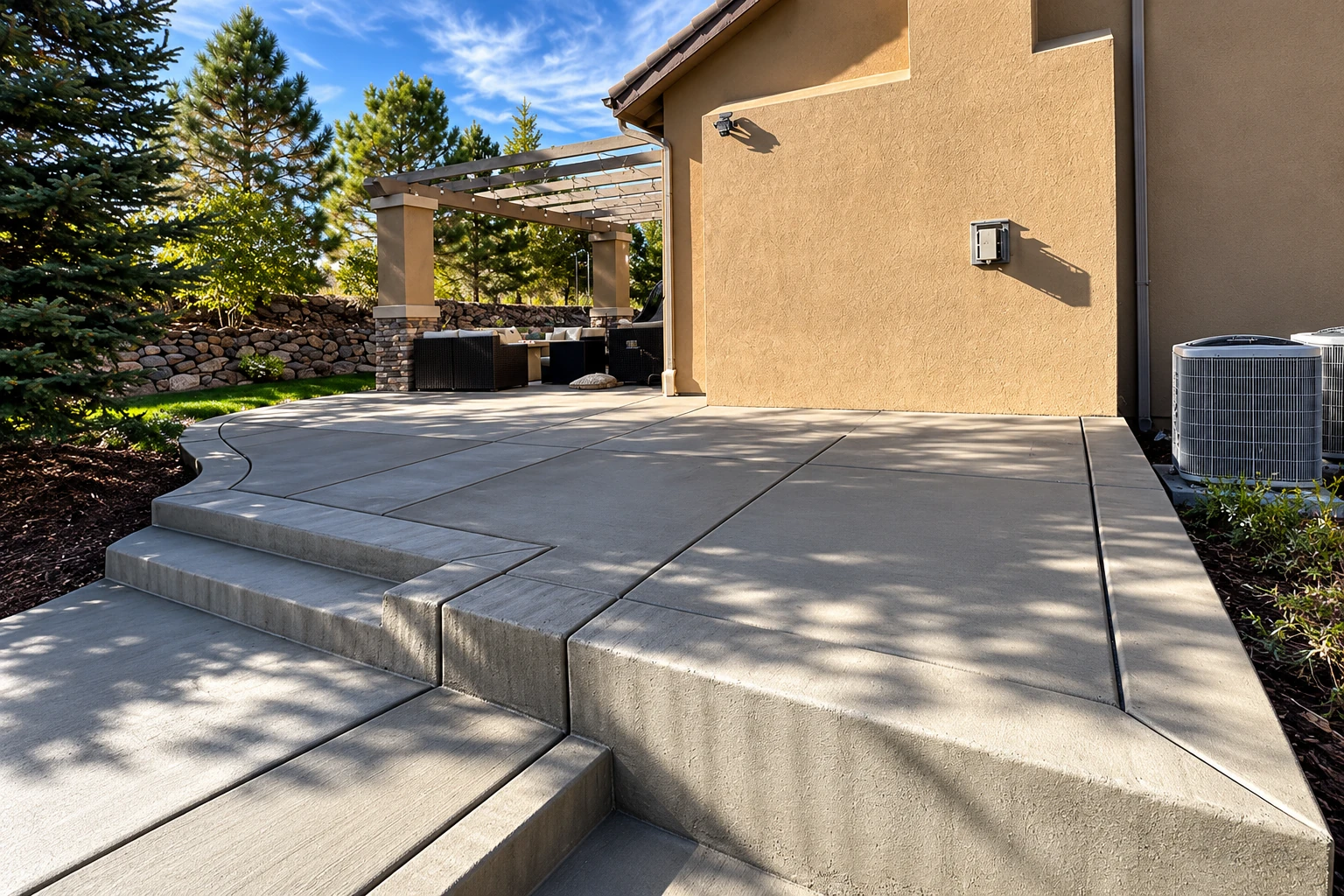
Look through these examples of concrete parking lots and other flatwork, flat slabs like drives and walks, to get ideas for your own site.
Parking lot questions we hear
Here are the questions Anchorage property owners ask us most about a concrete lot. If yours isn't here, call or send a message and I'll answer it for your site.
How much does a concrete parking lot cost in Anchorage?
The cost comes down to the lot's size, how much soft ground has to be dug out and replaced with packed base, how thick the slab needs to be for the traffic it'll carry, and how the lot connects to the street. A pour that has to be heated and covered in the cold costs more than one in summer. I'll put your figure in writing after I've walked the site.
What is the best concrete mix for a parking lot that gets ice melt?
An air-entrained mix is the one to ask for if you'll use deicers on the lot, because its tiny bubbles give expanding ice somewhere to go instead of building stress inside the slab. That's national industry guidance for concrete in general, and where ice melt goes down heavily, the guidance says more air may be needed. It's what we use on lots that will see deicers.
Can you pour a concrete parking lot in cold weather in Anchorage?
Yes, but only with protection, because fresh concrete freezes below about 25°F, and concrete that freezes can lose more than half its potential strength and won't be durable. Industry guidance calls for keeping a cold-weather pour from freezing for about two days after it's placed, and for clearing snow and ice and warming the ground it touches first, sometimes by insulating or heating the subgrade. It can be done, but for a lot I'd still rather wait for spring.
How long should I wait before using ice melt on a new concrete lot?
Keep deicers off a new lot for its whole first winter, and use them in moderate amounts after that. Ice melt soaks the surface and adds more freeze and thaw cycles, which is what makes concrete flake. A lot poured in spring or summer dries out as it ages, while a fall pour often doesn't dry enough before you need deicer, which is the reason behind the warm-season push I mentioned above.
Do I need a right-of-way permit for a parking lot in Anchorage?
You may need one if the work calls for temporary access from the street, changes an existing driveway or adds a new one, because the Municipality of Anchorage can require a right-of-way permit for those. Grading for the lot goes through the city's permit counter, and when the grading is part of a building permit there's no extra fee for it, though the application needs a total project value that counts every site improvement. We handle that paperwork with the city where we're able to, and if any part has to come from you or someone else, I'll tell you plainly who and what they'll want.
What causes a new concrete parking lot to crack?
Usually it's control joints cut late or skipped, or ground that settles under the slab. Concrete shrinks as it cures and moves with the cold, so some cracking is normal, and control joints, grooves cut partway into the slab, give those cracks a straight line to follow. We cut them on time so the cracks land where we chose.
Where we pour concrete lots
We're based in Anchorage and work in Anchorage and the cities around it. If you're not sure we come out your way, just ask.
Start planning your concrete parking lot pour
Lining up the plan and any permits over winter means a spring or summer pour isn't left waiting on paperwork.