Concrete driveway building in Anchorage AK - a slab that holds up through winter
Cracked, sinking or chipping driveway? We plan the base, the mix and the weather, then pour a new slab built for Anchorage freeze and thaw.
- Planned for snow We check street width and where your plowed snow will go.
- Base dug and packed We dig out and pack the base for firm ground underneath.
- A mix for freezing We order air-entrained concrete, made to handle freeze and thaw.
- Cold pours protected When it's cold, we plan protection before the pour date.
- Fully licensed and insured.
- Free on-site estimates.
- We reply within 1 business day.
How do you know your driveway is due for replacement?
Most driveways give plenty of warning before they fail, and catching the signs early usually means a cleaner tear-out and fewer surprises once we dig in.
Cracks that widen every spring
Hairline cracks are normal in concrete. Ones that open wider each breakup usually mean water is getting under the slab and freezing, and they end in broken chunks.
Sections that sank or tipped
When one panel drops below the next, the ground under it has usually settled or washed out. That edge catches toes, tires and the plow blade, and the panel keeps dropping.
Water running toward the garage
If melt runs back at the house or sits in puddles, the slab was sloped wrong or has sunk. Standing water turns to ice and works into every crack.
A top that flakes and chips
A surface that peels off in thin layers usually points to a mix that wasn't made for freezing or a rushed pour. It spreads every winter, and patches rarely hold.
Gravel that ruts every spring
A dirt or gravel drive ruts in breakup, tracks mud into the house and throws dust all summer. Paving it ends the yearly hauling of fill and regrading.
Broken edges at the street
Crumbled edges where the driveway meets the road usually come from plows, heavy trucks or a slab poured too thin there. Left alone, the break works back toward the garage.
How we build a concrete driveway in Anchorage
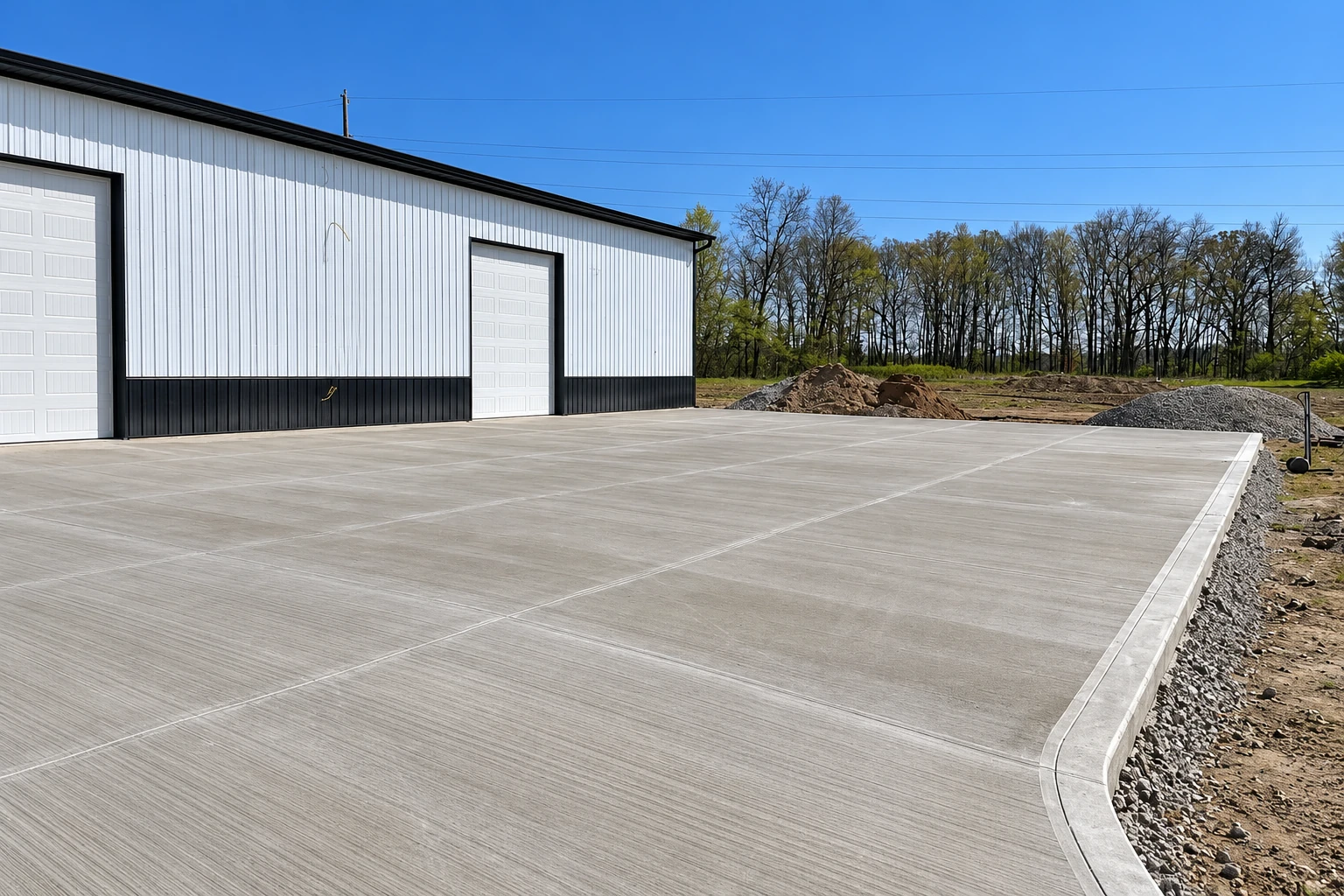
Concrete driveway building at Monolith Anchorage Concrete Company starts before anything gets formed. I look at how wide your driveway can be where it meets the street and where your snow will go come winter, because an entrance that fights the plow berm gets old fast. Then we break out the old slab if there is one, dig down and pack the subgrade, the ground the slab sits on, and set the grade so water runs away from the house. We order an air-entrained mix, concrete with tiny air bubbles that give freezing water room to expand, and if the pour lands in cold weather we plan how the slab stays protected before the truck is booked. We pour it, give it a broom finish, a light texture so tires and boots grip, and cut control joints, shallow grooves that tell the slab where to crack, early enough that it doesn't pick its own spots. If money's tight, I'd cut back on the surface before the base, because nobody sees the base on day one but it's what keeps the slab flat. Price moves with the size, the thickness, any reinforcement, whether there's an old driveway to haul off and how much base work the site needs. The schedule turns mostly on the weather and any permit for work at the street, and the written estimate I give you after seeing the site puts a figure on yours.
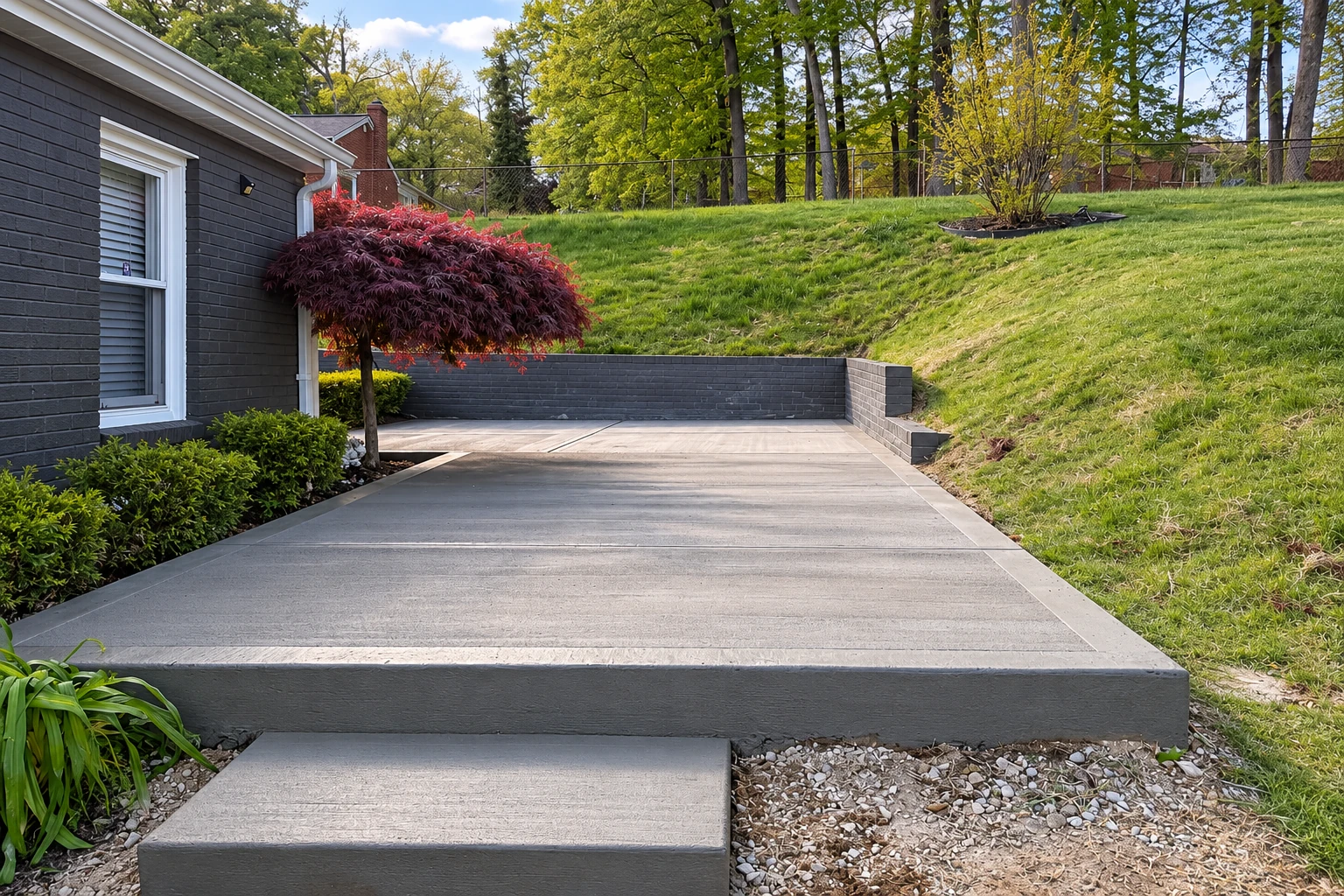
Driveways, patios and walks are all flatwork, concrete laid flat on the ground, so it often makes sense to plan them together. If you want a slab out back, we can quote a concrete patio along with the driveway, and if you'd like the apron or a border to look like stone or brick, we do stamped concrete too. Stamping costs more than a broom finish, and I'll tell you straight where it's worth it and where it isn't.
What happens after you call about a new driveway in Anchorage?
From the first call to the final walk-through, here's how a driveway job runs and where you come in.
Call or send the form
Call (907) 206-3358 or send the form, and I'll come out to look at the site. Show me what you park and where snow piles up.
Get your written estimate
I ask what you need, measure the driveway and your frontage, and give you the estimate in writing. Ask me anything before you decide.
We plan and pour
Once you say go, we line up any permits and set a pour date with the weather in mind. Cold-weather protection gets planned before the truck comes.
Walk the finished driveway
We clean up and walk the new driveway with you. You see the finish, the joints and where the water runs before we call it done.
Why Anchorage homeowners call Monolith Anchorage Concrete Company
The owner quotes and pours
I look at every job, write the estimate and work the pour with my crew, so what we agreed gets built.
In business since 2013
We've done flatwork and foundations for 13 years, planning for cold weather from the first site visit, not patching for it later.
Fully licensed and insured
We're covered on every job, so the risk isn't yours while our crew and the concrete truck work your property.
Driveways planned for Anchorage snow
We plan for the berm the plow leaves, the snow stacked along the street and pours that might land in a cold snap.
Get a written estimate for your new driveway
Tell us the driveway's rough size, your lot frontage, what you park and whether your street is a state road. We reply within one business day to set up your free on-site estimate, and there's no obligation.
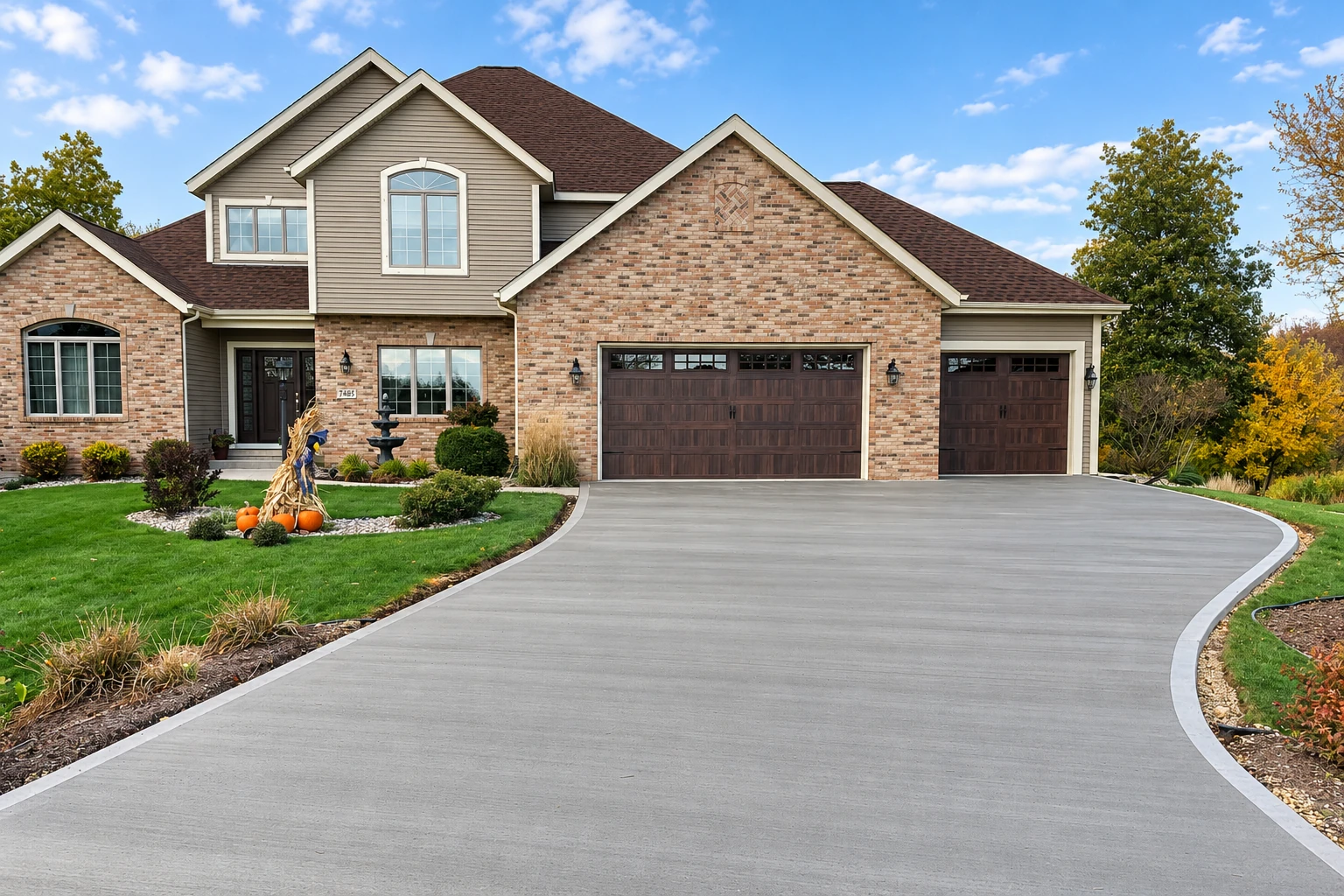
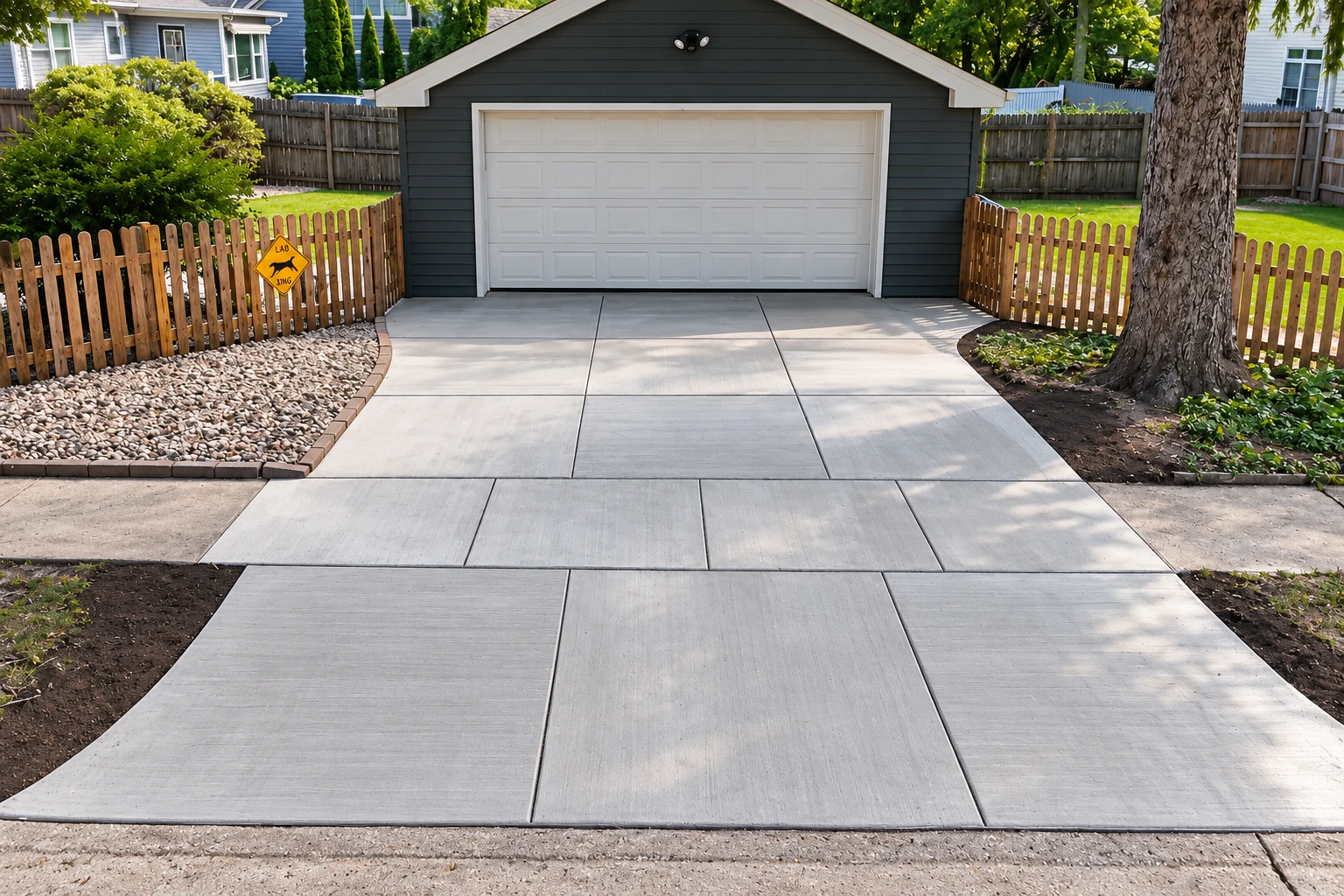
Concrete driveway examples
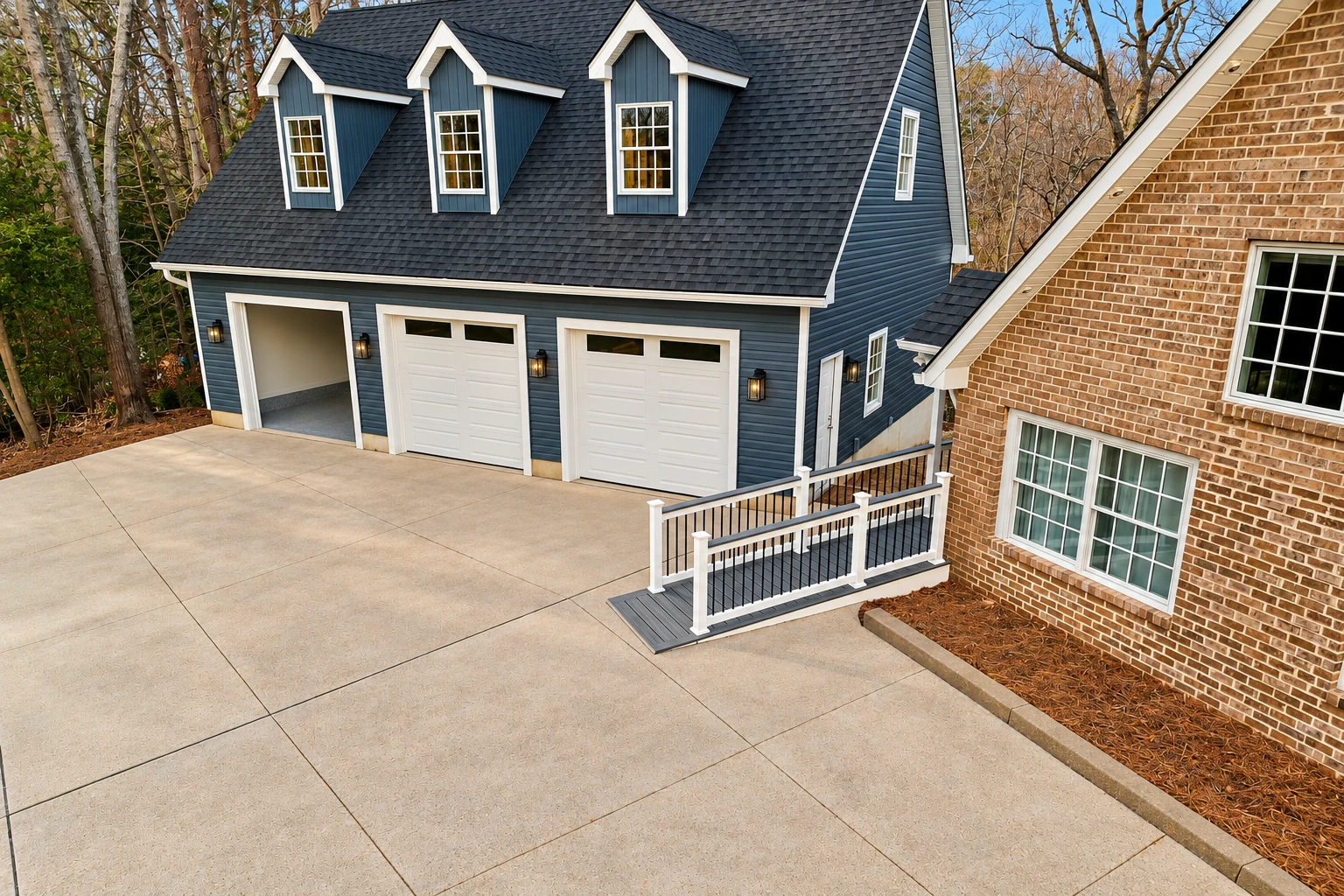
Look through these examples of concrete driveways and other flatwork to get a feel for finishes, edges and widths before we talk about yours.
Questions about concrete driveways
Here are the questions Anchorage homeowners ask most about a new driveway. If yours isn't here, call or send the form and ask me about your own lot.
How much does a concrete driveway cost in Anchorage?
An un-reinforced concrete driveway with no old slab to tear out usually costs about $7 to $13 per square foot in Anchorage. That's the going rate in the area, not a quote, and removing an existing driveway pushes the per-foot cost up. I'll give you a written figure for yours after I've seen the site.
Do I have to pave my driveway in Anchorage?
Yes, the Municipality of Anchorage requires driveways to be paved and kept up with a dustless, all-weather, hard surface suited to its sub-arctic climate. Concrete meets that, and the slab and base get built to standards the city's municipal engineer sets.
Who issues permits for driveway work near the street in Anchorage?
The city's Right-of-Way Permit Section issues right-of-way permits before work starts, and if you're on a state road, the Alaska Department of Transportation handles the driveway permit instead. A right-of-way permit only counts once utilities at the dig site are located, and the first locate on a project is free. We handle the paperwork with the city where we're able to, and if any part has to come from you, I'll tell you who and what they'll want.
How wide can my driveway be in Anchorage?
The city caps the total width of driveway entrances from a street at 40 percent of your lot's frontage, or 33 percent where the platting authority or traffic engineer finds conditions warrant it. City plowing may only clear 20 feet of driveway width however wide you build, and in winter the strip behind the road, which can run seven feet or more past the edge, is held for snow storage. So I measure your frontage and plan the entrance around all three.
How do I choose the right thickness for a concrete driveway in Anchorage?
Start with what you park, because one Anchorage cost guide calls four to five inches standard for standard-weight vehicles and says owners of heavier ones, such as trucks or RVs, may want six to eight inches. Tell me about the work truck, the camper or the trailer, and I'll size the slab around the heaviest thing that sits on it.
How long does a new driveway need protection from freezing in Anchorage?
About two days after the pour, according to national industry guidance, because fresh concrete freezes below about 25°F and frozen concrete can lose more than half its potential strength and won't hold up. Industry guidance counts it as cold weather once the average daily temperature stays under 40°F for more than three days in a row, and it calls for clearing snow and ice and getting the ground above freezing first, sometimes by insulating or heating it. Here that covers a good part of the year, so I plan the protection before we pick a date.
Where we pour driveways
We're based in Anchorage and work in the city and the cities around it. Pick your area below, or just ask if you're not sure we come out your way.
Get your concrete driveway planned before the snow flies
We back the work with satisfaction guaranteed on every job, so call (907) 206-3358 or send the form to get started.