Concrete retaining walls in Anchorage AK - a wall planned for frost and drainage
Leaning wall, slumping slope or soil washing onto the lawn? We build a concrete wall with the backfill and drainage to hold it back.
- Backfill in the bid Drainage gravel and the water's way out are priced upfront.
- Poured or block, explained We walk through which wall type suits your yard and why.
- Pour dates around weather We pick the pour date with the forecast in mind.
- Straight answers on permits We tell you plainly what's needed and who it comes from.
- Fully licensed and insured.
- Free on-site estimates.
- We reply within 1 business day.
How do you know your yard needs a retaining wall?
A wall that's starting to move or a slope that's sliding only gets harder to fix, because the soil keeps pushing and the water keeps coming.
Wall leaning out at the top
If the top of your wall tips toward the yard, the soil behind it is winning. Every freeze and thaw usually pushes it a little further.
Cracks running through the wall
Wide or growing cracks often mean water or frost is working on the wall from behind. Left alone, sections can break loose and drop soil downhill.
Mud on the lawn after rain
Soil on the walk or grass after rain or snowmelt means the slope is moving. A wall holds it in place before you lose more of the yard.
Wet streaks or ice on the face
Water or ice on the front of a wall usually means the drainage behind it is clogged or missing, so the pressure keeps building every season.
Bulging near the bottom
A wall that bows out near its base is carrying more than it was built for. That usually ends in a rebuild, and patching just buys time.
A slope too steep to use
If you can't mow, plant or set a patio on a hillside, a wall can turn part of it into level ground you'll actually use.
How we build concrete retaining walls
A concrete retaining wall in Anchorage starts with me walking the slope to see how much soil the wall has to hold, where the water comes from and what the wall will sit on, because soft or organic ground has to come out before anything goes on it. We go over a poured wall versus a block wall and why one may suit your yard better, then we dig out and pack the base, and for a poured wall we set the forms and rebar, the steel bars that hold the concrete together under the load, before the pour. The backfill and the spot where the water drains out matter as much as the wall itself, so both are in the bid and neither gets cut to save a few dollars. The price mostly turns on how tall and long the wall is, how easy your yard is to reach and whether an old wall has to come out first, while the schedule turns on the weather and any permit, and your written estimate gives you the number for your yard.
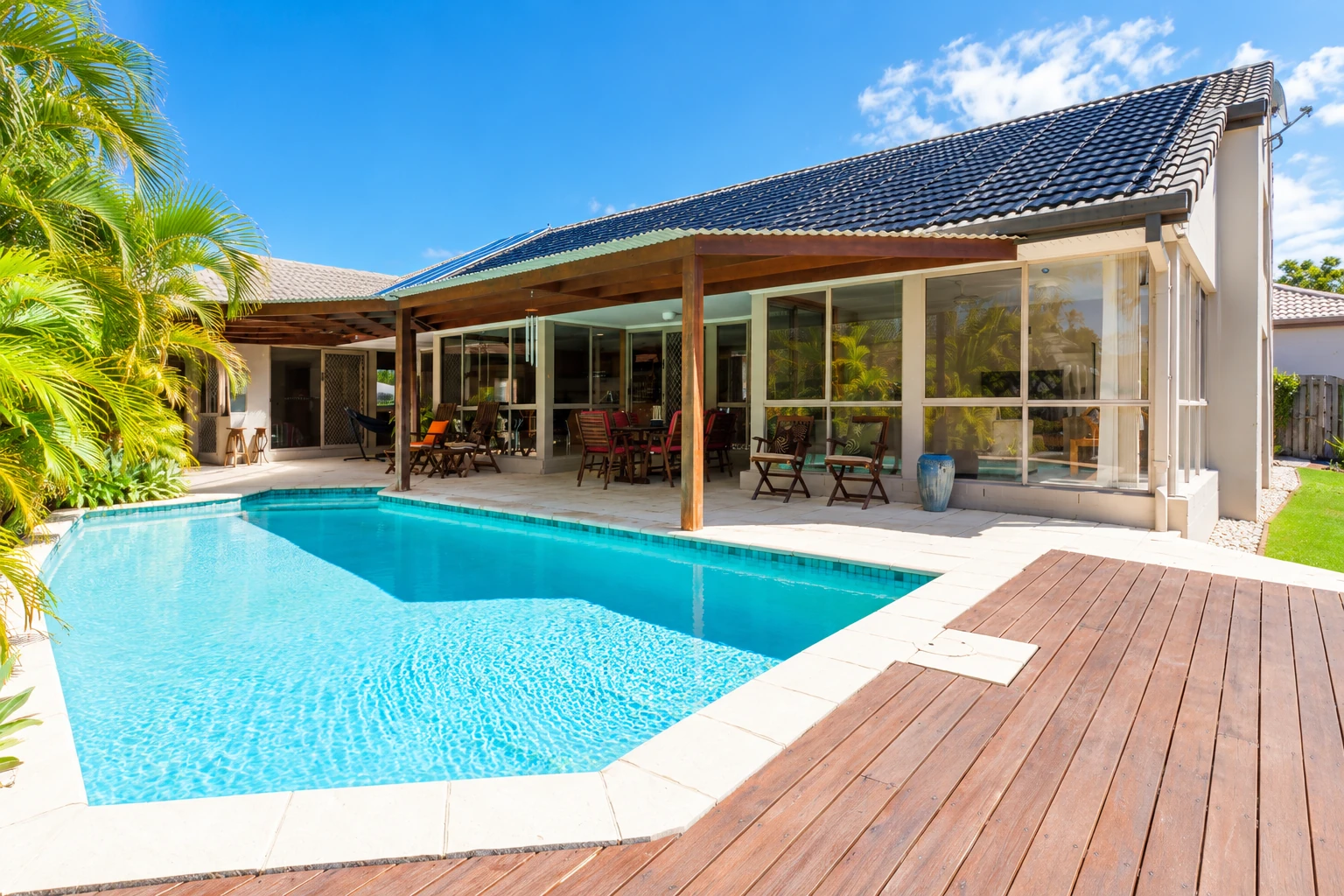
A new wall usually changes what you can do with the ground behind it. Level space above a wall is a good spot for one of our concrete pool decks, and when a wall cuts into a hill to make room for a shop or garage, our concrete floor installation crew can pour the slab inside it too.
What happens after you call about a retaining wall?
From your first call to the walk-through, I'm the one you deal with, and the plan is in writing before we dig.
Call or send a message
Tell us roughly how long and tall the wall needs to be. I'll set a time to come out and see the slope.
I look and write it up
I check the slope, the soil and where water runs, and ask what you need. You get a written estimate with backfill and drainage in it.
Permits and a pour date
Once you say go, we line up any permits and set a pour date with the weather in mind.
Walk the finished wall
When the wall is backfilled and the site is cleaned up, we walk it together. I'll show you where the water drains out.
Why Anchorage homeowners call Monolith Anchorage Concrete Company
The owner bids and pours
I look at every job, write the estimate and work the pour with the crew, so whoever bid your wall builds it.
In business since 2013
We started in 2013 and learned early that concrete is hard to undo, so we get the plan right before the pour.
Fully licensed and insured
Alaska requires a registration from the state commerce department before a contractor bids or works, so ask every bidder which one they hold.
Planned for Anchorage cold
We plan backfill, drainage and pour dates for frozen ground from the first visit, because frost is what pushes walls over here.
Get a written estimate for your retaining wall
Give us the wall's rough length and height, photos of the slope and the way in, and any old wall to remove. We reply within one business day to set up a free, no-obligation estimate on site.
Examples of concrete retaining walls
Look through these examples of poured and block retaining walls to get a feel for heights, finishes and layouts before we talk about yours.
Retaining wall questions we hear
These are the questions people ask me most about retaining walls in Anchorage. If yours isn't here, call or send the form and I'll answer it for your yard.
How much does a concrete retaining wall cost in Anchorage?
Poured concrete retaining walls in Anchorage usually cost about $40 to $50 per square foot of wall face, the front you see. That covers site prep, digging, the concrete, the steel and gravel backfill for a wall about 3 feet high, so extra height, terraces, curves, stamped or stained finishes and tearing out an old wall push it up. I'll measure yours and put the number in writing.
Does a short retaining wall need a permit in Anchorage?
A wall that stands alone and holds back 4 feet or less, measured from the bottom of the footing, is exempt under the Municipality of Anchorage building code, and building permits are optional outside the municipality's Building Safety Service Area. That's the code's stated rule, so check your own lot with the municipality before we dig. If your wall needs a permit, we handle the paperwork where we're able to and tell you plainly if any part has to come from you.
Can concrete be poured in cold weather in Anchorage?
Yes, concrete can be poured in the cold if it's protected properly. Industry guidance counts air at or below 40°F during the protection period, the stretch when fresh concrete has to be kept warm while it cures and gains strength, as cold weather, and colder air calls for more protection. Concrete poured then still gets strong enough when it's mixed, placed and protected right, so ask how a bid plans to keep the pour warm, and if a week looks wrong, I'd rather wait.
Why does backfill matter behind a retaining wall?
Backfill matters because water and frost behind a wall push on it harder than dry soil does. Newer wall designs use highly permeable backfill like sand or gravel so water drains away instead of building pressure or freezing into frost heave, the push of freezing ground, which can bend or break the wall. Ask where that water leaves the wall, because the drain path has to end at a real outlet, and weep holes, small drain openings in the wall, can't make up for clogged backfill.
What is the best way to choose between a poured wall and a block wall?
The best way is to weigh drainage, access and the ground under the wall for your yard. Block walls, called segmental walls, are stacked from separate concrete units and drain on their own, which helps keep water pressure down, and the small, light units fit yards that are hard to reach. The industry's installation guide for block walls lists organic and expansive soils as unsuitable foundations, so what's under the wall shapes the choice too.
How do I check earthquake ground risk for a retaining wall in Anchorage?
The Municipality of Anchorage publishes seismically induced ground failure maps that rate each area's relative potential for earthquake ground failure, from lowest to very high. The municipality says they're meant for general planning and aren't a substitute for engineering, so treat a high rating as a reason to look closer at your slope, not as a design. Bring it up at the estimate and we'll factor it into the plan.
Where we build retaining walls
We're based in Anchorage and work here and in the cities around it. Pick your area below, or call and ask if we come out your way.
Talk through your concrete retaining wall with us
We're open seven days a week, into the evening, and it's satisfaction guaranteed on every job.